
Trump Benefit of a Government Shutdown
by Alfredo Cuéllar At first glance, a government shutdown in the United States looks like institutional failure: closed offices, unpaid workers, suspended services. Yet for Donald Trump, paralysis is not defeat—it is a tool of power. &nb…
El DebaTex

 2 fotos

by Alfredo Cuéllar
At first glance, a government shutdown in the United States looks like institutional failure: closed offices, unpaid workers, suspended services. Yet for Donald Trump, paralysis is not defeat—it is a tool of power.
From a Micropolitical perspective, a shutdown provides him with several strategic benefits:
- Eroding trust in the State. Trump reinforces his narrative that Washington is inefficient and an enemy of the people. Chaos validates his discourse: “the system fails, I am the solution.”
- Shifting the blame. By pointing to Democrats or moderate Republicans as responsible, he turns the crisis into a political battlefield where he can appear as the only one willing to stand firm.
- Strengthening his base. His supporters do not see the shutdown as a tragedy, but as a symbolic act of rebellion against the establishment.
- Negotiating from chaos. By showing he can withstand the conflict longer than his opponents, he applies the principle of least interest, increasing his leverage.
- Normalizing authoritarianism. Each shutdown is presented as proof that democracy doesn’t work, opening space for solutions centered on the presidential figure.
In short: while society loses with paralysis, Trump wins if he manages to impose his narrative. The collective cost becomes a political gain for a leader who has turned chaos and lies into instruments of control.
Dr. Inquiries: alfredocuellar@me.com
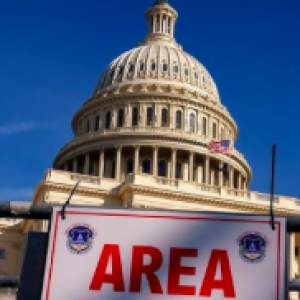
Trump, se beneficia del cierre del gobierno

Hidalgo County Judge Richard F. Cortez regarding Government Shutdown
Sobre el autor
El DebaTex
Lee también
Notas relacionadas

Tropas de OTAN en Ucrania es inaceptable, sostiene Kremlin
El DebaTex · 25 ago., 2026

Anthropic, Thomson Reuters y los fallos que están definiendo el futuro legal de la IA
El DebaTex · 24 ago., 2026

Anthropic añadirá marcas de agua a Claude, llueven las críticas de los usuarios
El DebaTex · 11 ago., 2026