
WHEN A NATION CELEBRATES ITS WARRIORS: A Micropolitical Reading of the State of the Union
IN SUMMARY By Alfredo Cuéllar* The controversial address by President Trump has just concluded. Since then, all manner of opinions has proliferated regarding its content, its tone, the accuracy of its claims, its exaggerations, its invited guests, and its silences. As in …
El DebaTex
 2 fotos
IN SUMMARY
By Alfredo Cuéllar*
The controversial address by President Trump has just concluded. Since then, all manner of opinions has proliferated regarding its content, its tone, the accuracy of its claims, its exaggerations, its invited guests, and its silences. As in every State of the Union, there were figures, promises, and partisan disputes. But this time — as is often the case in moments of heightened polarization — there was something deeper: symbols.
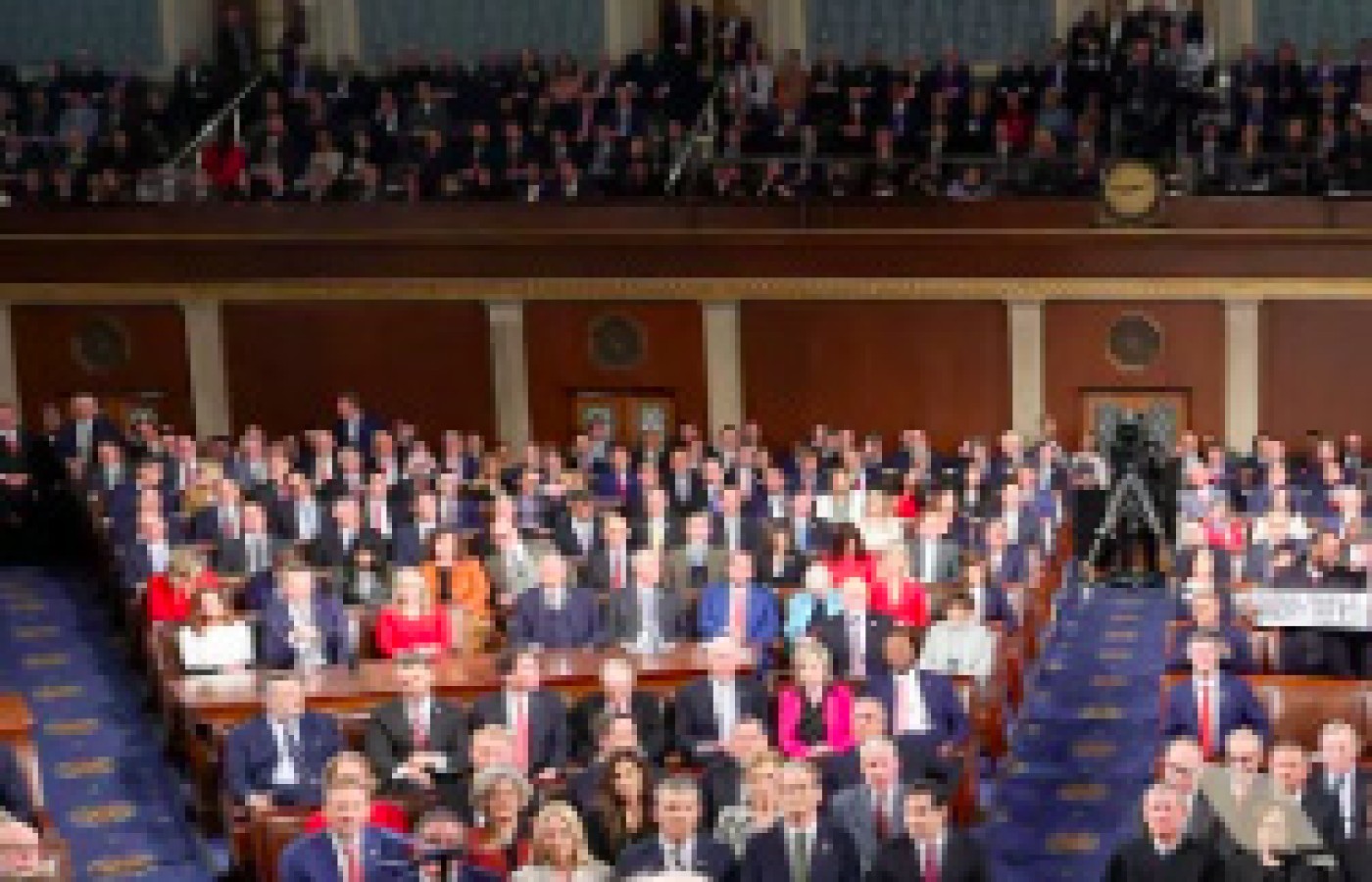
In the president’s recent speech, the emotional weight granted to uniformed figures was striking soldiers, border agents, law enforcement. The longest applause, the few moments in which the audience rose as if it were a unified nation, the most solemn passages and the most moving stories were all linked to those who embody defense, sacrifice, and combat.
Not even the hockey team that defeated Canada for the gold medal escaped this symbolic logic: in this narrative, athletes too are warriors, fighting battles in arenas and stadiums.
And how does this symbolism translate into everyday life?
When politics adopts the language of combat, institutions tasked with enforcing the law cease to be perceived as administrative bureaucracies and begin to be viewed as forces on campaign. Within this symbolic framework, ICE agents are no longer merely officials executing immigration policy; they are presented as guardians defending the nation against a threat.
If the agent is a warrior, the undocumented migrant ceases to be a person in an irregular legal situation and becomes the “adversary.” And those who question the methods, who call for proportionality or due process, risk being symbolically positioned on the opposing side — not as legitimate critics, but as obstacles.
The narrative does not explicitly order confrontation, but it suggests it. And in politics, symbolic suggestion is often sufficient.
This is no minor gesture. Celebrating “warriors” is a narrative choice. And every political narrative reveals a conception of power.
The Warrior as Symbolic Figure
In Micropolitical terms, power does not rest solely on formal institutions; it is also legitimized through images that organize collective emotion.
The warrior fulfills three symbolic functions:
- It represents order in times perceived as uncertain.
- It embodies discipline in the face of fragmentation.
- It offers a narrative of sacrifice that unifies.
But that figure also presupposes something implicit: the existence of threat. There is no warrior without an adversary. There is no defense without danger.
When national discourse emphasizes defense, it suggests that the nation conceives of itself — or wishes to conceive of itself — as besieged, even when the threat is not always objective but perceived.
The Displacement of the Imaginary
Every nation chooses, consciously or unconsciously, which figures to elevate as its mirror.
It may choose the innovator.
The teacher.
The entrepreneur.
The scientist.
The community worker.
The victim.
Or it may choose the warrior.
No choice is neutral.
When the central applause falls upon those who fight, collective identity becomes articulated around conflict. The language shifts: protection, threat, border, strength. The horizon is redefined in terms of security rather than prosperity or creativity.
This does not necessarily imply a literal militarization of the state. It implies, rather, a symbolic reorientation of the national narrative.
The Micropolitics of Honor and Authority
In Micropolitics, honor is a powerful tool. Publicly recognizing uniformed figures produces immediate emotional cohesion. But it also concentrates legitimacy in hierarchical structures.
The warrior belongs to a vertical order. He obeys and commands. He protects and controls. His presence reinforces the idea that stability depends on firm authority and clear discipline.
When this figure dominates the symbolic stage, the deliberative space — more horizontal and plural — tends to shrink within the public imagination. Politics begins to approximate the language of combat.
It is no coincidence that, in contexts of growing polarization, the rhetoric of honor and sacrifice gains ground. Conflict offers moral clarity. And moral clarity simplifies the political field.
A Prudent Reading
None of this diminishes the real service of those who risk their lives for their country. The question is not the dignity of the uniform. The question is the political use of the symbol.
At its core, when a nation celebrates its warriors with particular intensity, it reveals something about its collective emotional state. It shows where it perceives fragility and where it seeks strength.
Micropolitics teaches us that symbols do not merely describe reality; they produce it.
If the central hero is the combatant, politics will tend to organize itself around conflict. If the central hero is the builder, politics will tend to organize itself around shared projects.
The State of the Union does not merely report on the country. It also suggests what kind of country it seeks to imagine.
And that imagination — silent yet powerful — is already a form of exercising power.
*Dr. Alfredo Cuéllar is the creator of the discipline of Micropolitics and a retired professor in the United States. He has devoted his academic life to the study of invisible power in organizations and public life, developing his own conceptual framework to analyze how symbols, relationships, and narrative’s structure authority. alfredocuellar@me.com
CUANDO LA NACIÓN CELEBRA A SUS GUERREROS: Una lectura micropolítica del "State of the Union"
El diálogo con universitarios define el nuevo rumbo de la UAT: rector
Sobre el autor
El DebaTex
Lee también
Notas relacionadas
Anthropic, Thomson Reuters y los fallos que están definiendo el futuro legal de la IA
El DebaTex · 24 ago., 2026

Anthropic añadirá marcas de agua a Claude, llueven las críticas de los usuarios
El DebaTex · 11 ago., 2026
Aumenta a 188 el número de muertos por sismo en Colombia
El DebaTex · 11 ago., 2026