
Continuation of “From New York to California”
The Invisible Power and the Politics of Agitation by Alfredo Cuéllar FROM NEW YORK TO CALIFORNIA, THE INVISIBLE POWER CAN BE SENSED Behind the victories and defeats that marked the 2025 electoral cycle moves a silent yet decisive actor: the invisible power. It does not ap…
El DebaTex

 2 fotos
The Invisible Power and the Politics of Agitation
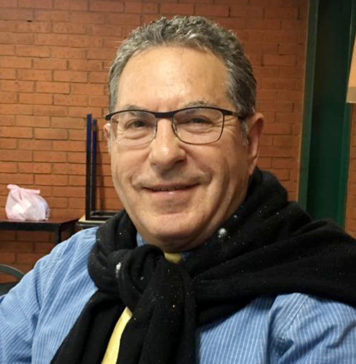
by Alfredo Cuéllar
FROM NEW YORK TO CALIFORNIA, THE INVISIBLE POWER CAN BE SENSED
Behind the victories and defeats that marked the 2025 electoral cycle moves a silent yet decisive actor: the invisible power.
It does not appear in press releases or in vote counts; it does not sit in congresses or hold rallies. Yet it operates as an adaptable, liquid, and omnipresent system that migrates, rents itself out, or invests wherever it perceives a risk to its interests.
ECONOMIC POWER USES INVISIBLE POWER
This power —which, in micropolitical terms, constitutes the unconscious structure of economic power— does not belong to a single group but to a constellation of actors: large corporations, investment funds, media owners, digital platforms, religious leaders, celebrities, and technology companies.
Its strength does not lie in formal control but in the ability to manipulate perceptions, construct narratives, and shape identities.
It is the power that works unseen, yet its effects are everywhere: in economic decisions, in media agendas, in the algorithms that mold public opinion, and in the collective fears planted with surgical precision.
INVISIBLE POWER DOES NOT GOVERN
We might say that invisible power does not govern; it induces attitudes first, then behaviors.
It does not pass laws, yet it defines the limits of what is possible in the minds of the governed.
When those who exercise that invisible power feel their privileges are in danger, they activate their symbolic machinery: they finance campaigns, redefine discourses, reorder emotions, and buy time.
It is, in essence, an adaptive power that reinvents itself under the guise of the market, of faith, or of freedom.
TRUMP AS THE INSTRUMENT OF INVISIBLE POWER
In this context, Donald Trump is not merely a politician: he is the emotional instrument of invisible power.
His skill lies not in governing but in mobilizing primitive passions, in turning discontent into spectacle and fear into identity.
To those who doubt it, one need only observe the caution with which much of the press refers to his government, or the intimidation tactics directed at those who look like Mexican migrants.
Trumpism offers no order: it offers belonging.
It offers no goals: it offers paths.
It offers no destinations: it offers journeys.
A GOVERNMENT OF MILLIONAIRES FOR MILLIONAIRES
From his first inauguration, it was evident that his administration would be a government of millionaires for millionaires—they are the ones who set that invisible power in motion.
The tax cuts for great fortunes, financial deregulation, and indulgence toward corporations were unmistakable signs that economic policy would serve invisible power, not the common citizen.
THE SHOW MUST GO ON
That is why, when the economy falters or politics becomes predictable, Trump seeks agitation, not stability.
His energy comes from conflict: he needs enemies, crises, scandals — the show must go on.
Each confrontation feeds the faith of his followers and strengthens the media ecosystem that sustains him, distancing the public from reflection and rationality.
His leadership does not administer; it disturbs.
And in that disturbance, hidden interests find their safest refuge.
THE MICROPOLITICAL LESSON IS CLEAR
The true power of the twenty-first century is not exercised through tanks or decrees, nor by riot police or courts that claim to represent law and justice, but through managed emotions, fabricated identities, and programmed narratives, while the ordinary citizen remains unaware.
In the face of this invisible power, democracies must rediscover their sense of community and rebuild the spaces where power becomes visible again — debated, questioned, and human.
Those who call themselves defenders of democracy must reinvent themselves, educating one another to perceive the new tactics and strategies of their adversaries.
Dr. Alfredo Cuéllar is a professor and international consultant, founder and systematizer of Micropolitics as a discipline—the study of everyday exercises of power in organizations and public life. He was the first Mexican to teach at Harvard Graduate School of Education and is the author of Micropolítica: El poder que habita en lo cotidiano. Comments & clarifications: alfredocuellar@me.com
Continuación de “Desde NY a California”

México rechaza declaración de persona non grata contra su presidenta por Congreso de Perú
Sobre el autor
El DebaTex
Lee también
Notas relacionadas
Tropas de OTAN en Ucrania es inaceptable, sostiene Kremlin
El DebaTex · 25 ago., 2026

Anthropic, Thomson Reuters y los fallos que están definiendo el futuro legal de la IA
El DebaTex · 24 ago., 2026

Anthropic añadirá marcas de agua a Claude, llueven las críticas de los usuarios
El DebaTex · 11 ago., 2026