IN SUMMARY

by Alfredo Cuéllar*
Human history is not explained solely by great battles, international treaties, or emblematic dates. It is explained, above all, by invisible processes of power that operate before, during, and after open conflicts. At that deep level—everyday, symbolic, relational—is where Micropolitics operates.
Invasions, colonizations and displacements are not merely military or geopolitical events; they are long-term micropolitical operations. In them, territory is not the only thing conquered: the narrative is usurped, the identity of the defeated is reconfigured, their culture is degraded, and, ultimately, their collective memory is taken away.
The case of the Maya people, recently documented with historical and scientific rigor, is exemplary. For centuries, the Maya were not only dispossessed of their lands and political autonomy; they were denied recognition as one of the great civilizations of humanity. The victor’s Micropolitics operated with precision: without legitimate memory, there is no right; without recognized history, there is no voice in the present.
Invasion: the beginning of invisible power
Every invasion begins with an act of force, but it is consolidated through subsequent micropolitical acts: naming the other, classifying them, rendering them inferior, describing them as incapable of governing themselves. The Spanish conquest in Mesoamerica did not only destroy political structures; it eliminated intellectual elites, burned codices, and killed astronomers, priests, and historians. It was a cognitive cleansing. The message was brutal: without memory, there is no legitimacy.
This pattern does not belong to the past. It is reproduced today through new discourses and technologies.
Colonization: administering subordination
Colonization is not a closed historical event; it is a permanent micropolitical system. It is sustained by degrading the dominated culture and exalting that of the dominator. For centuries it was insisted that the Maya had “collapsed,” that they were incapable of sustaining a complex civilization, that their disappearance was almost natural. Today we know that narrative was false and functional to power.
The Maya did not collapse they reorganized, migrated, resisted, and survived. The myth of collapse served to justify dispossession, render survivors invisible, and normalize contemporary inequality. That is Micropolitics in its most effective and ethically absent form.
The new archaeology and the politics of “collapse”
It is worth pausing here, because what we know today about Maya civilization does not come from an ideological revision, but from a scientific revolution in archaeology. Researchers such as Francisco Estrada-Belli, Marcello A. Canuto, and other international teams have shown—through technologies such as LIDAR (Light Detection and Ranging, a remote-sensing technology that uses laser pulses emitted from airplanes, helicopters, or drones to measure the Earth’s surface with extreme precision), ancient DNA, and climatic studies—that the traditional narrative of a “Maya collapse” was profoundly mistaken.
For decades it was argued that the Maya were incapable of sustaining complex societies in the tropical rainforest, that they exhausted their resources, and that their disappearance resulted from their own “ecological irrationality.” Today we know the opposite occurred: the Maya developed one of the most sophisticated and sustainable environmental management systems in human history, capable of sustaining populations now estimated between 9.5 and 16 million people during their centuries of greatest splendor.
The idea of collapse was not innocent. It functioned—consciously or unconsciously—as a retrospective micropolitical operation: if a civilization “fails,” then it does not deserve heirs; if it disappears “through incompetence,” its descendants cannot claim historical, territorial, or political legitimacy. Misinterpreted scientific narratives became instruments of symbolic domination.
Grandeur as the threshold of conflict
Yet even this new archaeology does not idealize the Maya world. On the contrary, it reveals something more uncomfortable and universal: every great civilization, at the height of its development, generates internal tensions. Population growth, concentration of power, inequality in access to land, economic competition, internal wars, loss of trust in elites, and climatic effects do not automatically destroy a civilization, but they do force it to transform. When these tensions become politicized and irreconcilable, the existing order erodes.
This is not exclusive to the Maya. It happened in Rome. It happened in medieval empires. It is happening today. Progress does not eliminate conflict; it multiplies it. And when elites fail to manage these tensions with legitimacy, polarization, violence, and social reorganization emerge. History does not break; it is reconfigured.
Displacement: when the loser becomes an obstacle
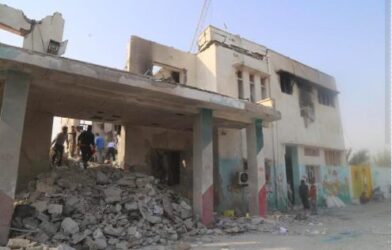
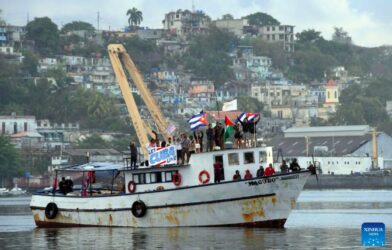
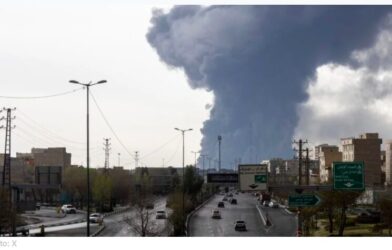
Forced displacement is always presented as an inevitable consequence, never as a political decision. Yesterday it was Indigenous peoples; today it is migrants, refugees, and civilian populations trapped between wars.
In the United States, Mexico, Ukraine, or Palestine, the displaced lose more than their homes: they lose voice, narrative, and public humanity. They are reduced to numbers, threats, or “collateral damage.” The mechanism is the same: dehumanize to govern without guilt.
The victor writes history (and distorts it)
One of the most powerful micropolitical operations is control of the archive: what is taught, what is omitted, what is ridiculed. For decades, even archaeology denied Maya grandeur; it went so far as to attribute their cities to extraterrestrials. The implicit message was devastating; you could not have done this.
Today, that same pattern appears when migrant cultures are denied, when Palestinians are reduced to statistics, or when Ukrainians are treated merely as pieces on a geopolitical chessboard. Power does not need to exterminate everyone; it suffices to usurp their history.
Degrading one culture to preserve another
The Micropolitics of invasion always includes a central symbolic act: elevating one culture by degrading another. It is not openly stated “we are superior”; it is suggested that the other is backward, violent, unproductive, or incapable of self-government. Thus occupation, intervention, and exclusion are justified.
The Mayas were presented as a people of the past. Today, many migrants are presented as people “without culture.” The names change; the power does not.
The present as a mirror of the past
The article about the Maya is not only about archaeology. It is about the present. When societies lose trust in their leaders, when power concentrates, when inequality becomes normalized, and when the official narrative no longer convinces, political structures are reconfigured or break apart. That happened in the Maya world. It is happening today.
Contemporary Micropolitics manifests in institutional distrust, the violation of laws by authority itself, the growing influence of organized crime, corruption, impunity, polarization, mass migrations, and the denial of the other. It is no coincidence; it is structural.
Conclusion: memory as a battlefield
Peoples do not disappear; they are expelled from the narrative. Micropolitics forces us to look where power acts without declaring itself: in language, in memory, in everyday humiliation.
Today, as yesterday, wars are not fought only with weapons. They are fought with narratives, through media, social networks, carefully administered silences, and ghost publics.
And if the victor continues to usurp the memory of the defeated, distrust, migration, and conflict will continue to reproduce themselves.
The question is not whether history will repeat itself.
History is not resolved by naming it; it is contested. The question is who the power will have to sustain it when doing so carries an ethical and political cost.
Dr. Alfredo Cuéllar: Retired professor at Fresno State University, international consultant, and creator of Micropolitics (Micropolitics: The Exercise of Power), a discipline that analyzes every day and invisible power in organizations, politics, and social life. alfredocuellar@me.com