
IN SUMMARY
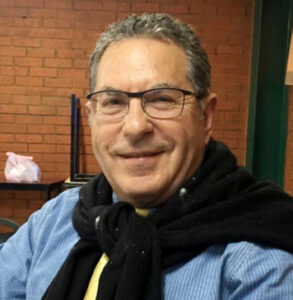
by Alfredo Cuéllar
Based on the text by Vito Saint Germain: explicit recognition to the original author for his sharpness and analytical clarity. Those of us who write live with ideas percolating in the mind, putting concepts in order and aligning them with events. Suddenly, someone publishes what we were thinking —and does so brilliantly. My respects to Vito Saint Germain.
- Introduction: When History Returns as a Warning
The magnificent text by Vito Saint Germain, which inspires this article, touches a nerve that in Micropolitics we know well: those who exercise power tend to repeat the same mistakes, especially when they feel threatened by the criticism of the young.
When listening to President Claudia Sheinbaum attribute the mobilizations of Generation Z to external manipulators, “chavorrucos,” “international right-wing forces,” and almost mythological conspirators, it echoes a historical pattern that those of us who belong to the Baby Boomers know intimately.
Because I was there. As an active participant in the 1968 student movement, as an eyewitness in Tlatelolco, and as a young man who lived through strikes, repression, dismissive official speeches, and conspiracy theories manufactured from within the government, I can confirm word for word what Vito writes. I have lived it all before.
And from Micropolitics —a discipline I have developed over decades— I can affirm this is not accidental; it is structural.
- Chapter 9: The Power That Corrupts — and the Hybris Complex
In Chapter 9 of my Micropolitics book, I dedicate an entire section to a universal phenomenon:
Power corrupts because it alters one’s perception of reality. It distorts. It isolates. It deifies.
And when that happens, what classical theory calls the Hybris Complex emerges.
What is the Hybris Complex? Hybris, inherited from classical Greece, is the disease of absolute power:
- The ruler begins to see themself as infallible.
- Loses the ability to listen.
- Confuses criticism with betrayal.
- Interprets any protest as a plot.
- Surrounds themself with voices that only applaud.
- And ends up seeing enemies where there are only dissatisfied citizens.
In Micropolitics we explain that Hybris is not a moral flaw, but a structural deformation of power: when no one can confront you, reality ceases to be a limit.
And that is exactly what Vito denounces.
When the Mexican President interprets youth protest as “manipulation,” “international destabilization,” or “dirty war,” she reproduces —with surprising fidelity— the logic of Díaz Ordaz in 1968.
Hybris is precisely this: the psychological and political incapacity to accept that the people think for themselves.
III. The Mirror of 1968: What We Baby Boomers Learned
Vito says it brilliantly: the argument is the same.
- Then: “foreign hands,” “professional agitators,” “international communists.”
- Today: “international right wing,” “digital manipulation,” “destabilization.”
Only the vocabulary changes; the logic does not.
- In Summary: Memory Is a Mirror, Not a Weapon
History —I know this because I lived it firsthand— never repeats itself exactly, but it rhymes.
And political rhymes are persistent, stubborn, and often warn us of something deeper:
- When power ridicules the young, power weakens.
- When power stops listening, it begins to fall.
- And when power convinces itself that everything is a conspiracy, it stops governing and starts defending itself.
Generation Z is not an enemy nor a manipulated instrument:
it is a mirror. An uncomfortable mirror, yes —but a mirror, nonetheless.
In 1968 we learned —with blood, with absences, with scars— that silencing young voices does not pacify a country: it fractures it.
And we learned that governments that listen survive; those that disdain end up sinking in their own arrogance.
- A Respectful Recommendation to the President
President Sheinbaum:
you have the historic opportunity not to repeat the mistakes of your predecessors.
Generation Z does not want to be indoctrinated; it wants to be heard.
It does not want vertical explanations; it wants horizontal dialogue.
It does not seek to topple governments; it seeks to be taken seriously.
As a student of power —and as a survivor of another generation that was also disqualified— allow me to suggest something fundamental: Do not govern against them. Govern with them.
Dr. Alfredo Cuéllar is a professor and international consultant, expert in Micropolitics, he was a professor at Harvard. Comments & Contact: alfredocuellar@me.com